October 31- November 4, 2022. After visiting the popular golden triangle in India, it was time to head north into Nepal. First stop: Lumbini, the birthplace of Buddha. I’d been worried about the border crossing but everything went smoothly. Our guide seemed to have contacts everywhere so we avoided the lines and whizzed through. There was a surprise covid test at the border which everyone passed! I was a little worried since we all had sniffles and sore throats. My sore throat went away after a few days. I think it was probably from the air pollution. I’ve taken to wearing a mask outside to reduce the amount of dust and smoke I inhale.
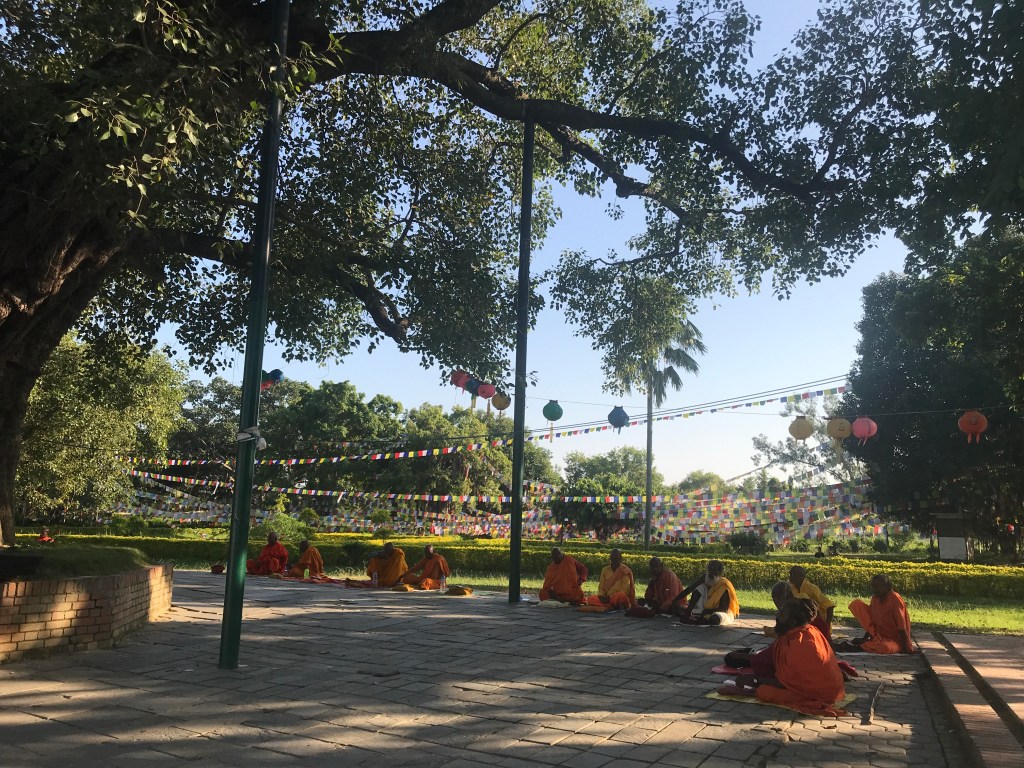
Lumbini was very lush. We saw where the Buddha was born about 2,500 years ago. It was probably the palace where he grew up sheltered from the world. Pilgrims come from all over to pray at the site. Many monks were meditating under the trees.
After traveling through India, it made it a lot easier to image how Buddha left the palace and saw suffering. Even today so many people were barely surviving. So many beggars including young children. I saw a guard at the border yell at two children. One was about 2 and the other 4. They were begging for food. One member of the tour gave them some crackers and they practically inhaled them. I could easily see Buddha, a prince turned beggar, traveling the same roads we did. Travel makes everything so much more real. I learned about both Hinduism and Buddhism in school but actually seeing them practiced and visiting the important sites makes me understand them better. That being said, having the background of multiple world religion classes absolutely helped.
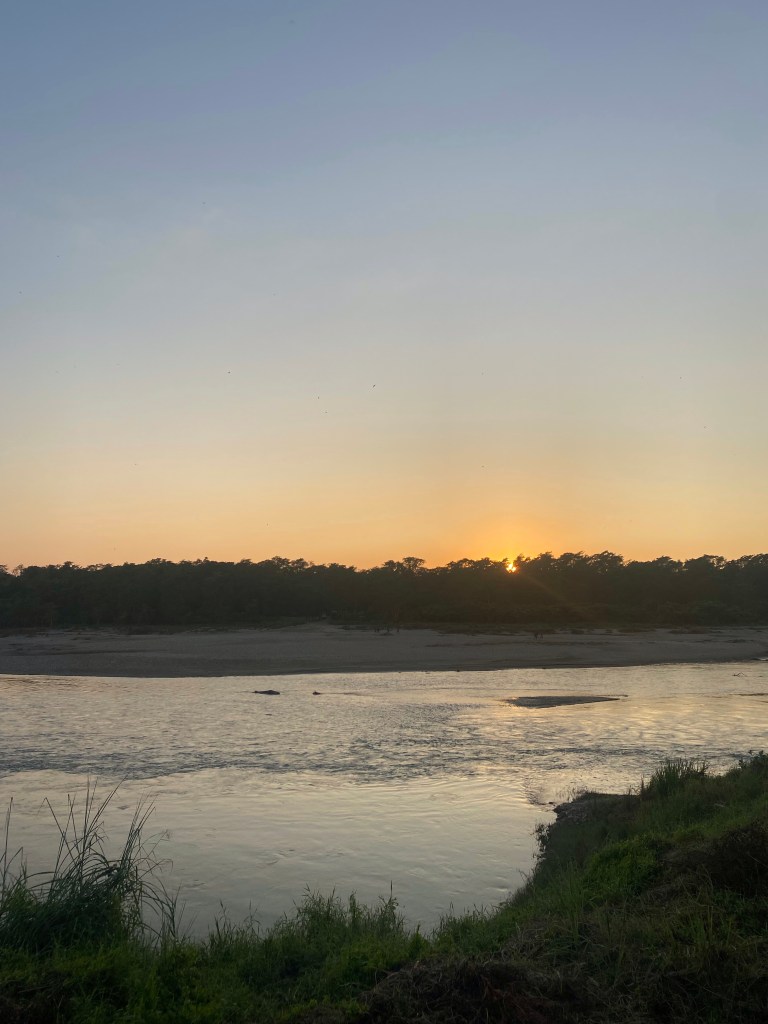
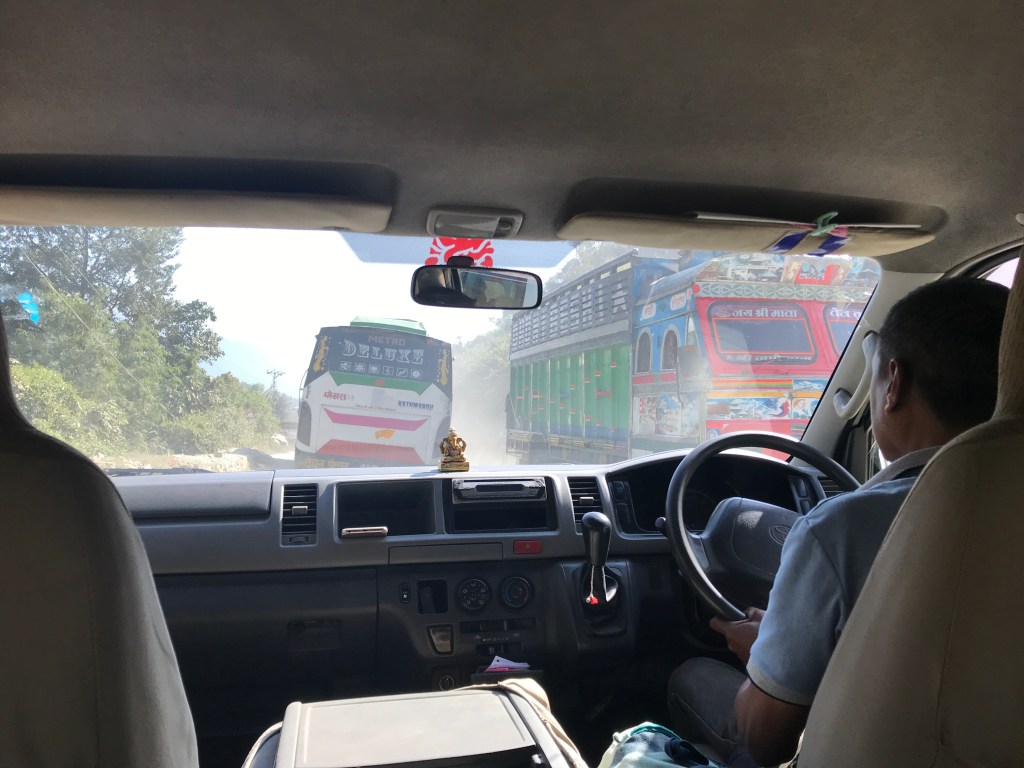
The next day we said goodbye to religion and hello to nature as we drove to Chitwan National Park. The roads in Nepal were in the worst condition of anywhere I’ve been. Between floods, earthquakes, landslides and minimal resources, roadwork is constant and very slow. Imagine roads that had been paved but then covered in rocks and mud, and with tons of deep potholes. Going 100km took most of the day. Thankfully there was always something to look at: a cow laying in the road, farmers harvesting rice, families of five on one motorbike, or very colorful hand painted trucks.
Once we arrived in Chitwan, we got into safari mode. I brought out the binoculars I’d been carrying around since Africa and layer up the bug spray. There is a dengue outbreak in Nepal currently so avoiding mosquitos became even more important. The antimalarials I was taking wouldn’t do any good against dengue fever so I wore long sleeves and insect repellent everywhere.
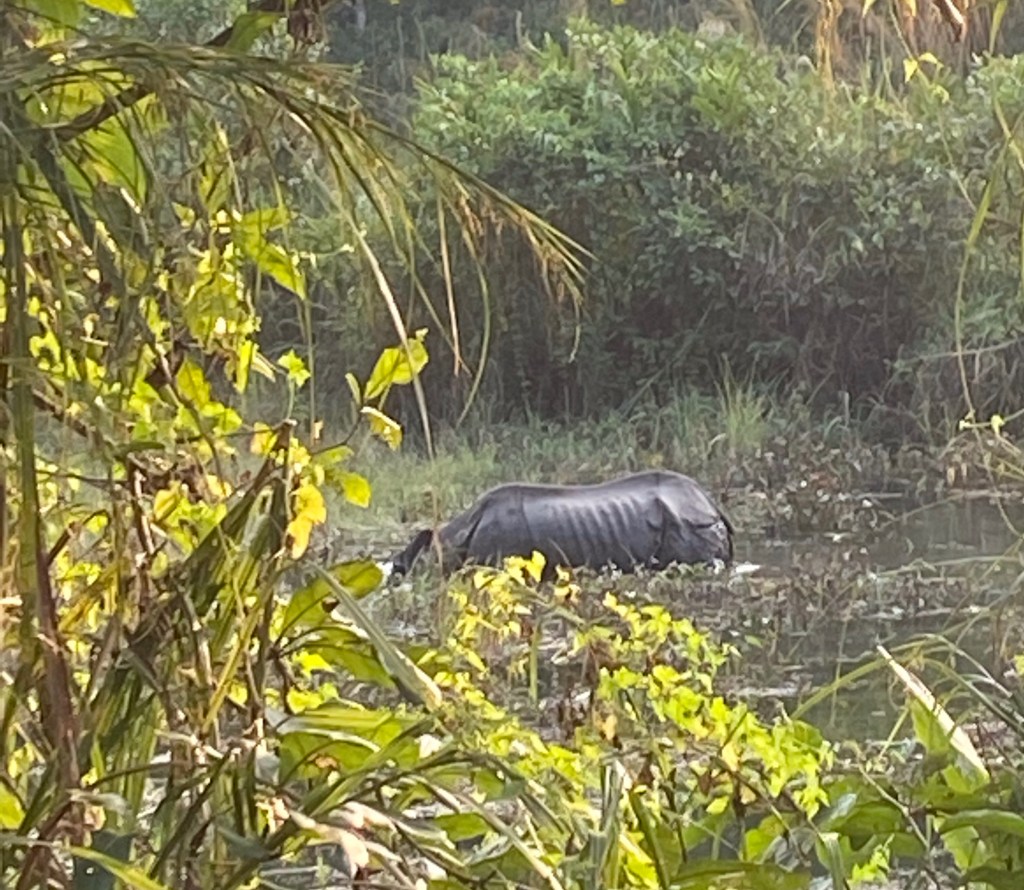
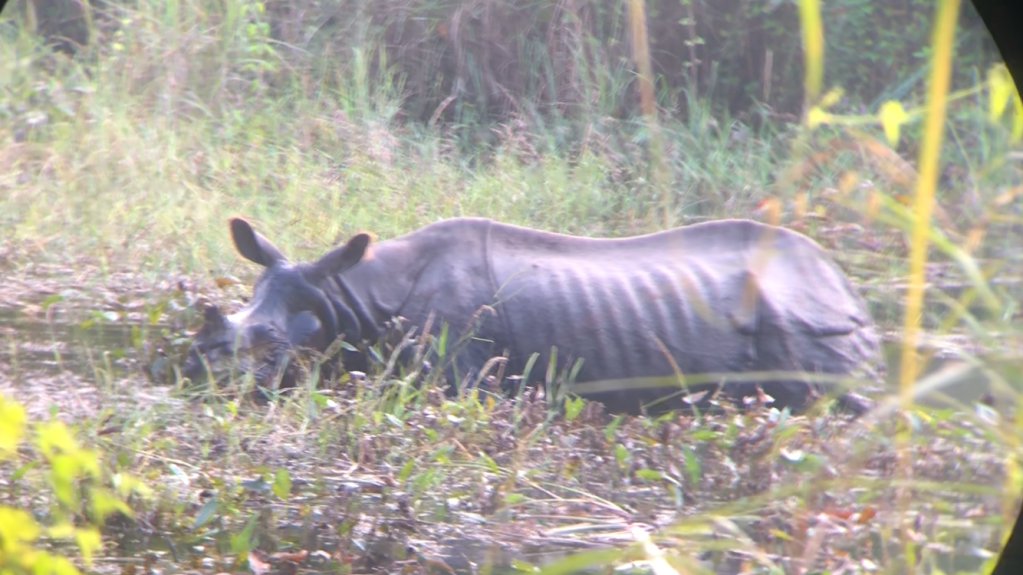
The highlight of Chitwan was seeing rhinos on a Jeep Safari. The habitat in Chitwan was a mix of dense jungle and thick elephant grass. This made spotting animals 10x harder than my safari in Botswana. We missed the tiger and other large cats but did see many rhinos. They look so different than the African species. These have skin that looks liked plated armor. So impressive!
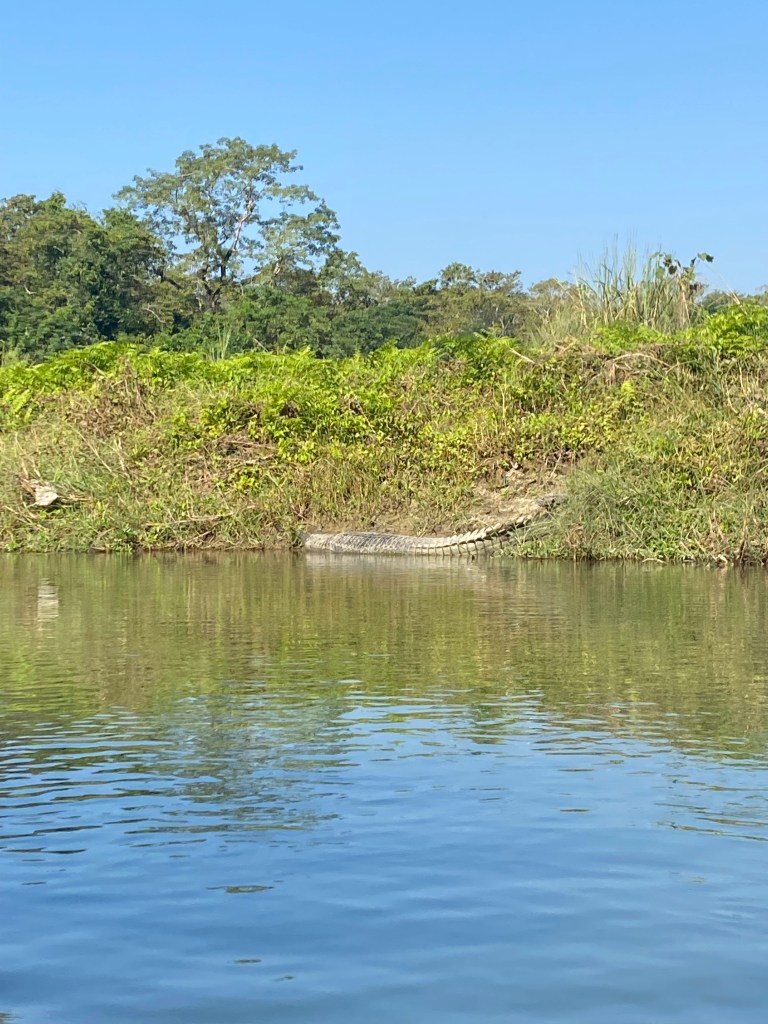
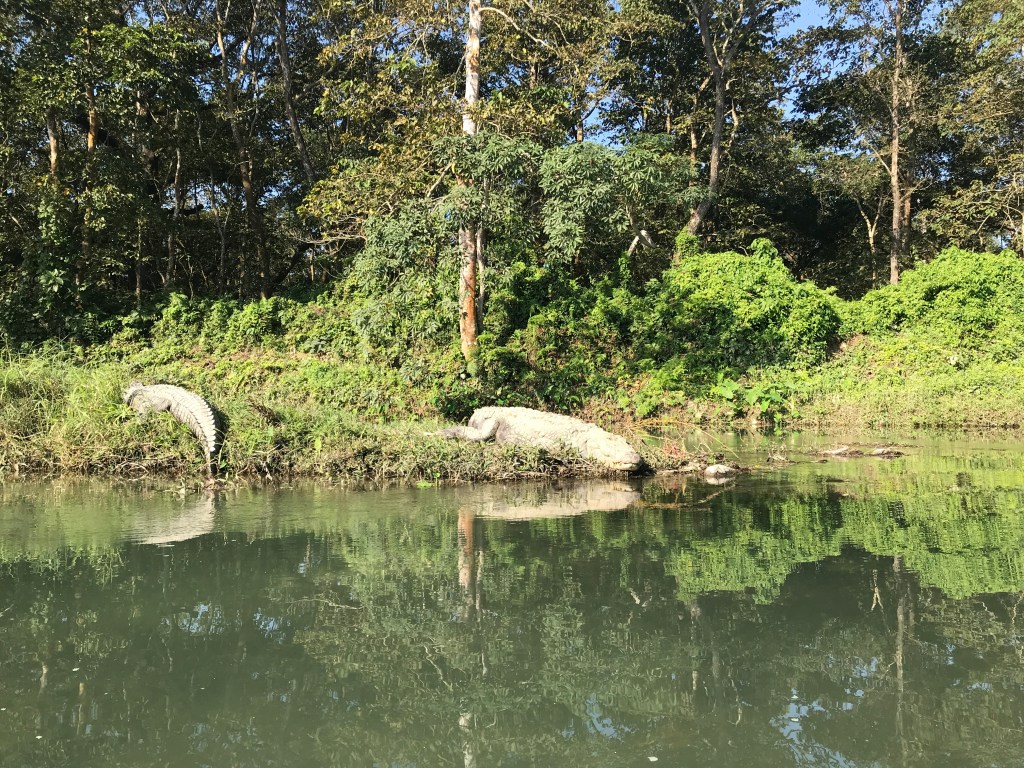
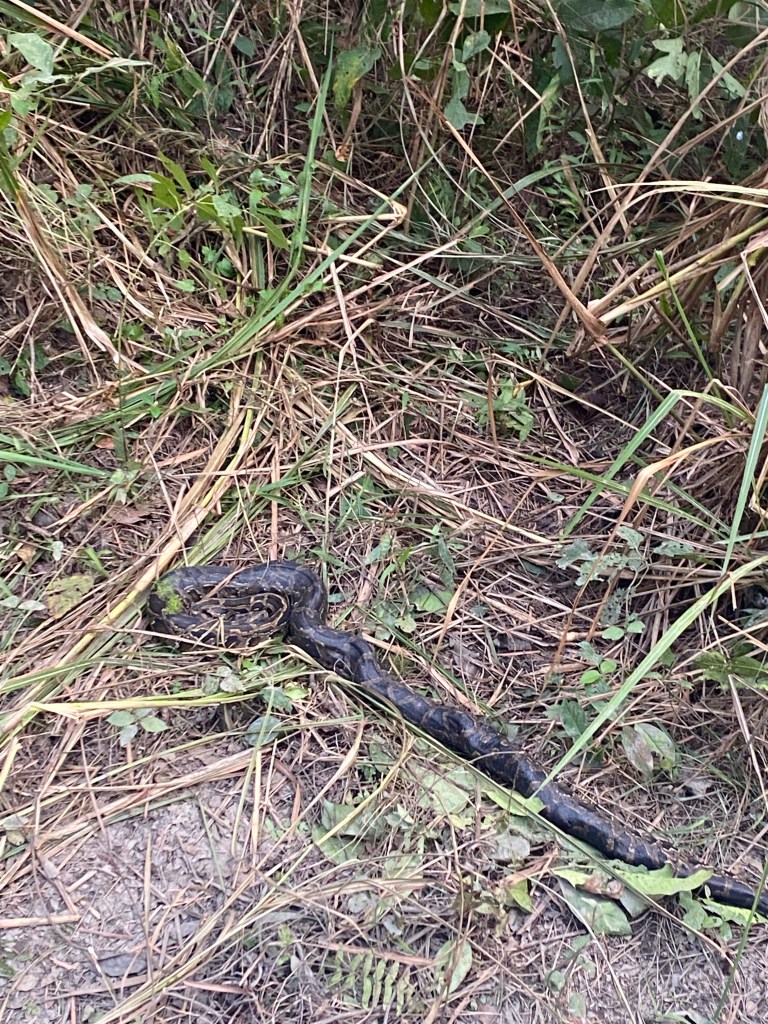
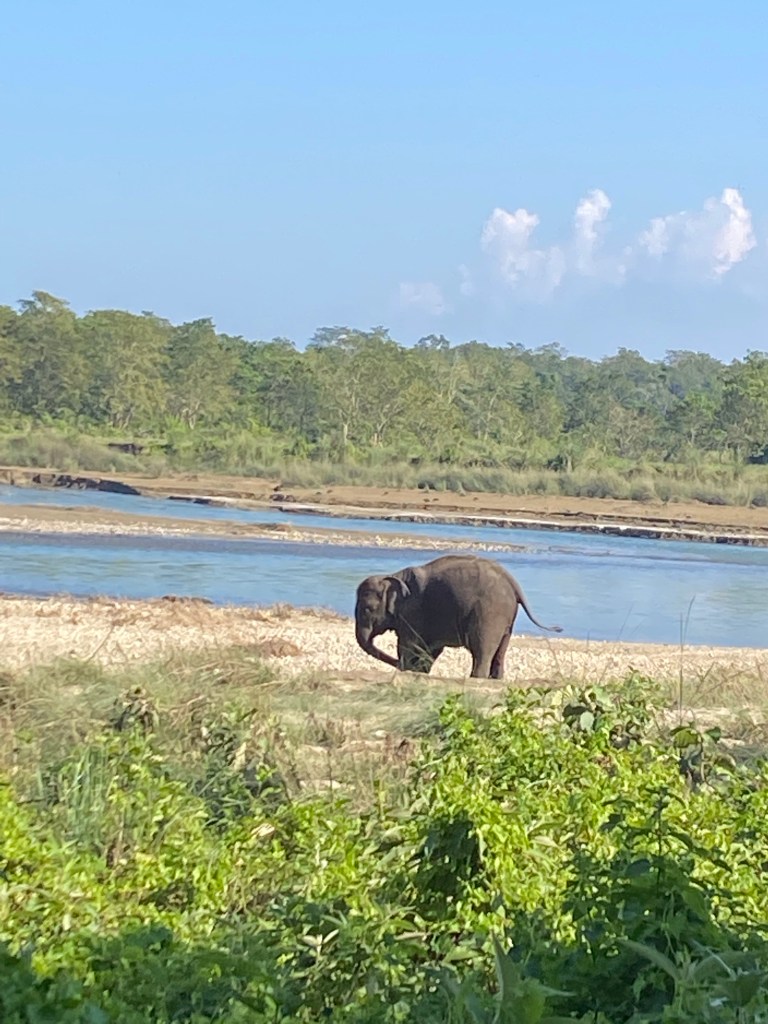
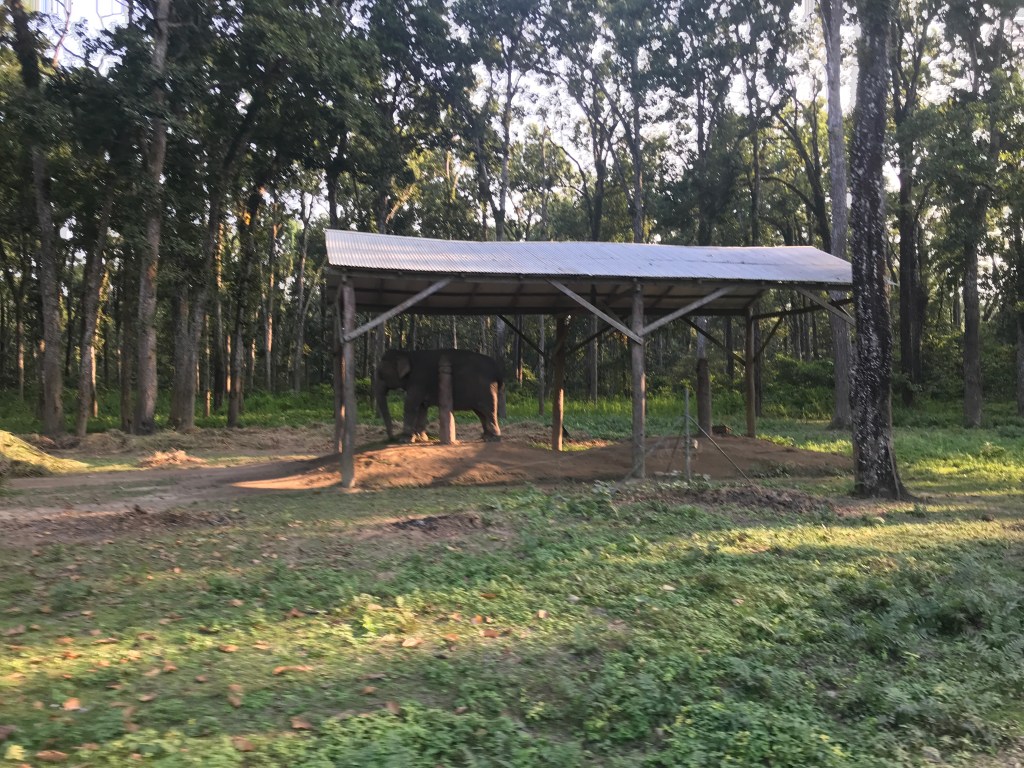
We also saw two different types of crocodiles while canoeing. One is especially dangerous. Chitwan continues to offer elephants riding and the army uses elephants as well. This meant we saw the “elephant stables”. It was sad. Especially after seeing elephants to roaming free in their large family groups in Africa the contrast was hard to stomach. In the stables, their legs are chained together so they can’t get away. They get to go graze for a few hours a day in view of the tourists who think they are seeing wild elephants. Apparently, there still are a few wild elephants in a Chitwan but they are very rarely seen since they stay deep in the park.
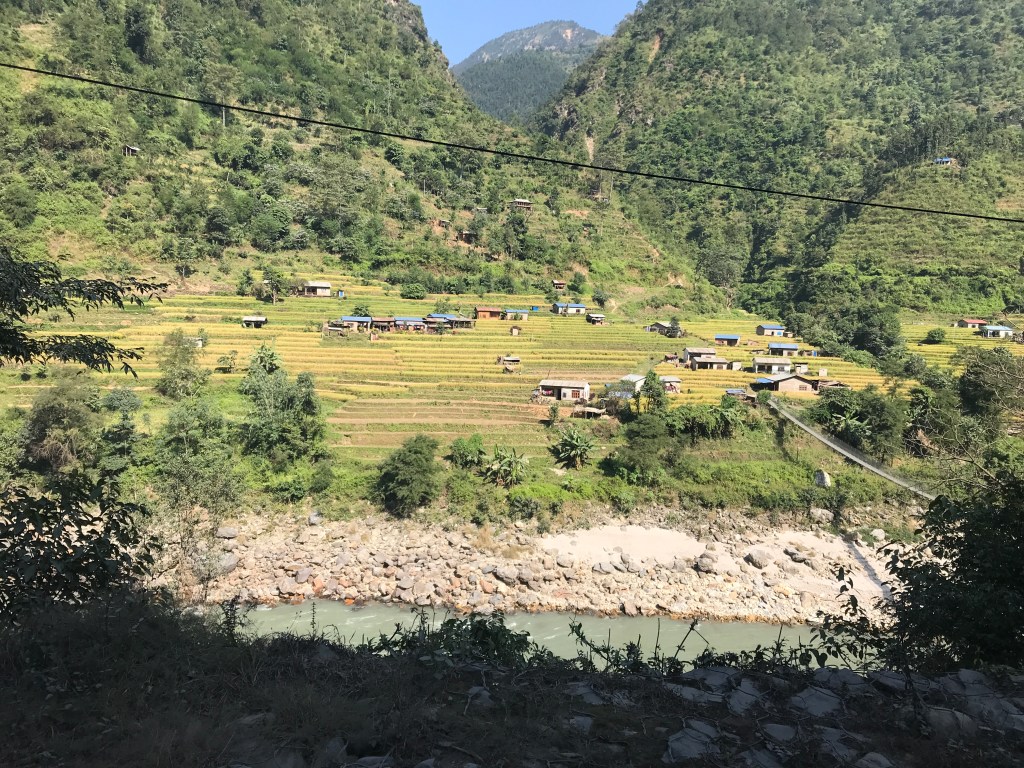
After Chitwan, we made the long journey to Kathmandu. The two lane highway is under construction and due to the quality of the road it took us about 8 hours to reach Kathmandu. The drive was stunning though. It follows the trisuli river (which we’d be rafting in a few days) around hills and mountains. People build shops right on the cliffs between the road and the river. Daily life was on display- women washing clothes, people bathing in the mountain springs, cooking corn and fish over wood fire to sell to travelers, children playing with whatever they could find. We stopped for Marsala tea a few times and had lunch at one of the roadside cafes. Nepali food has more Chinese influence so my go to dish became fried noodles with egg and vegetables. Such a nice change after the extremely spicy dishes in India.
Kathmandu is an expanding city in a valley surrounded by hills. If the air quality was better, the Himalayas should be visible. Kathmandu is full of tourists. It’s a mix of trekkers and hippie/ spiritual types. The Thamel area is a backpackers dream. Cafes served baked goods and fancy coffees along with fast internet, shops sold everything from down jackets to baggy pants to yak blankets to singing bowls to tea and spices. It was busy but not as chaotic as the streets in India. It felt relaxing and all of us needed a bit of relaxing.
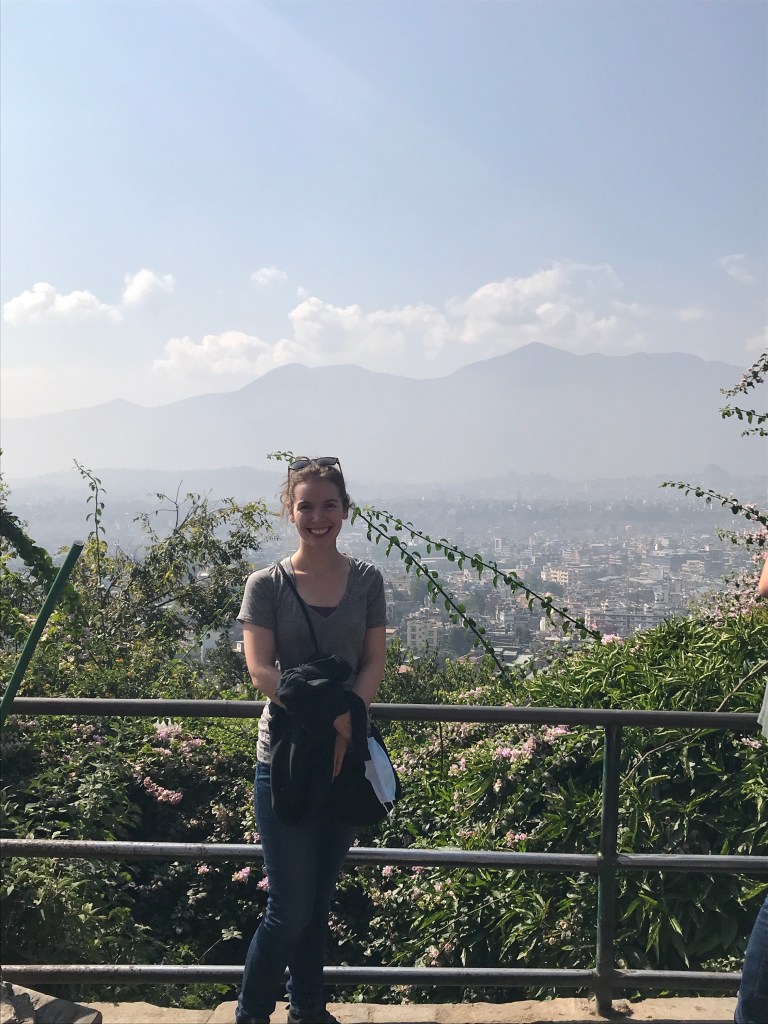
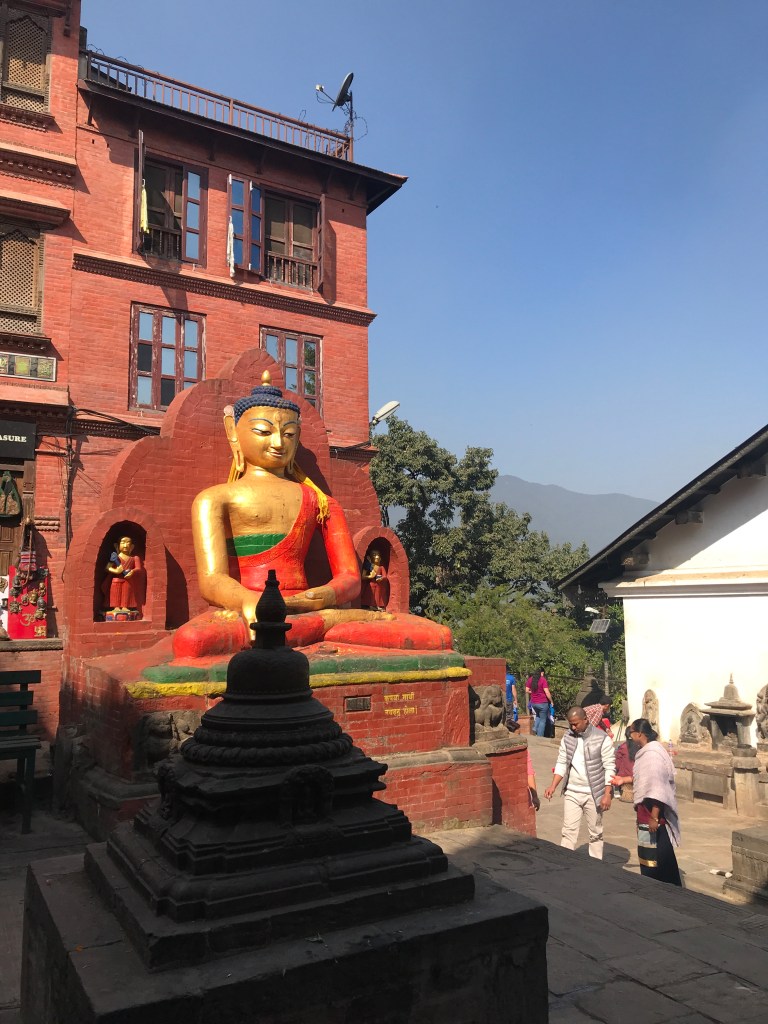
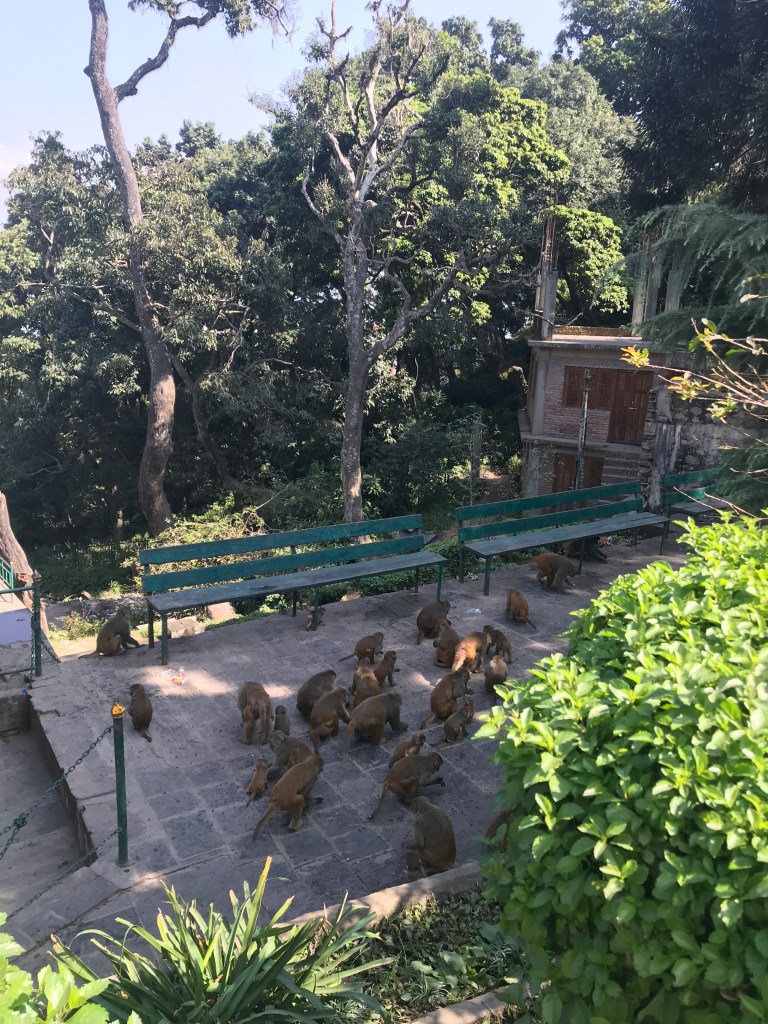
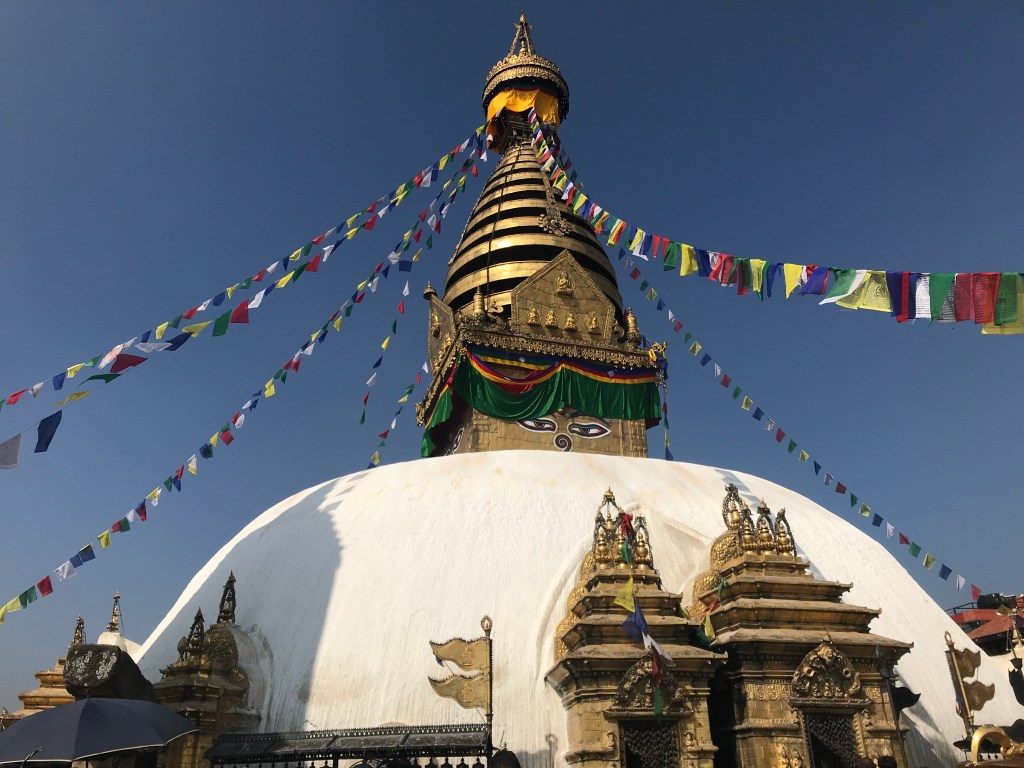
My tour was a combination tour meaning some people would leave in Kathmandu while others would join. The tour guide changed also. We had one free day in Kathmandu and we made the most of it. We visited the large monkey temple, hung out at a cafe, ate falafel wraps, went shopping, got massages, and then met up for a group dinner. I really enjoyed the laid back vibe of Kathmandu. I now understand how people end up staying months or even years. Nepal is a country that I can see myself returning to multiple times. It’s full of the kindest and hardest working people.
Again, thanks to Gouraang, Laura, Jessica and Jesse for some of the pictures!
 Elizabeth’s Adventures