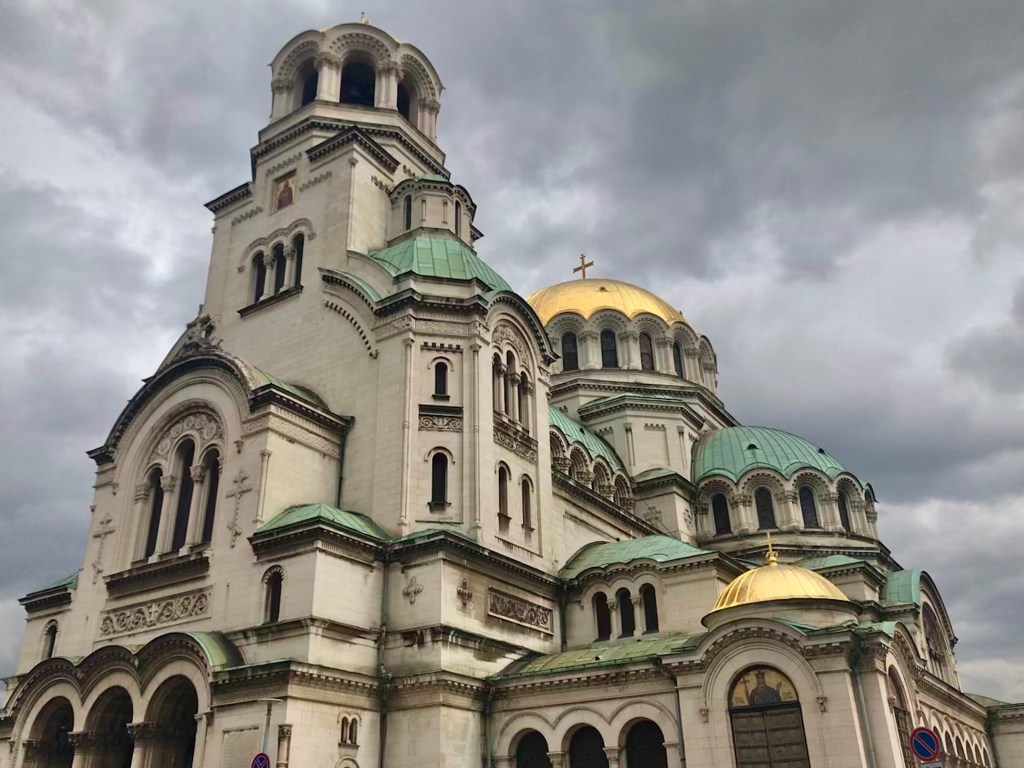
Sep 26-28, 2022. After spending some time in Albania, I’d gotten tons of warnings about Bulgaria. One woman even used google translate to make sure I knew that “Bulgarians are horrible people”. Travel has taught me that people are generally good, but I’ll admit that I wasn’t sure what to expect. Spoiler- I had a wonderful time in Bulgaria and met many nice and helpful people.
To reach Sofia from Prizren I first took a bus to Skopje, North Macedonia. It took around 3 hours. I had 3 hours before my next bus left so I tried to explore a little. It was rainy and I only lasted an hour or so before I returned to the station for a hot cup of tea and bowl of chicken soup. (I’m not counting this as visiting North Macedonia. I’ll be back someday!)
The bus to Sofia left on time and took 5.5 hours. We stopped many times both for the border crossings and for bathroom breaks. This gave me time to meet the other travelers. I really enjoyed talking with a couple who’d just returned from 6 months in South America and a backpacker from Australia. Making friends is useful since the backpacker and I discovered we were staying at hostels very close to each other. This meant I felt comfortable walking the 10 minutes to my hostel instead of taking a taxi (which I’d heard would try to rip me off).
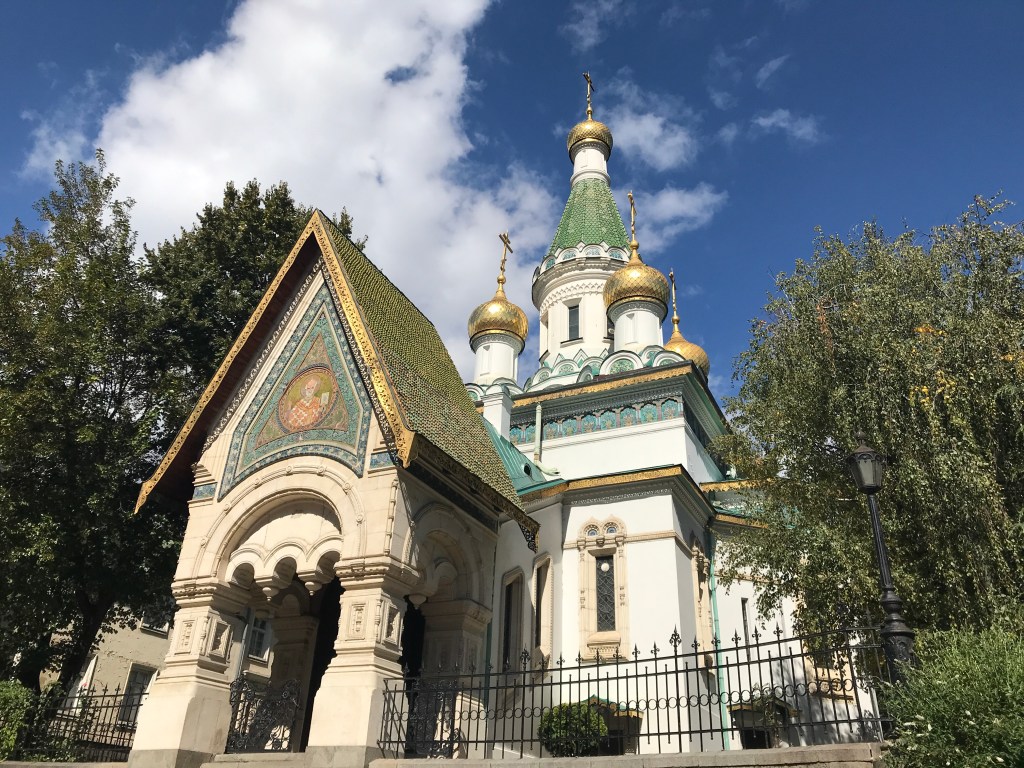
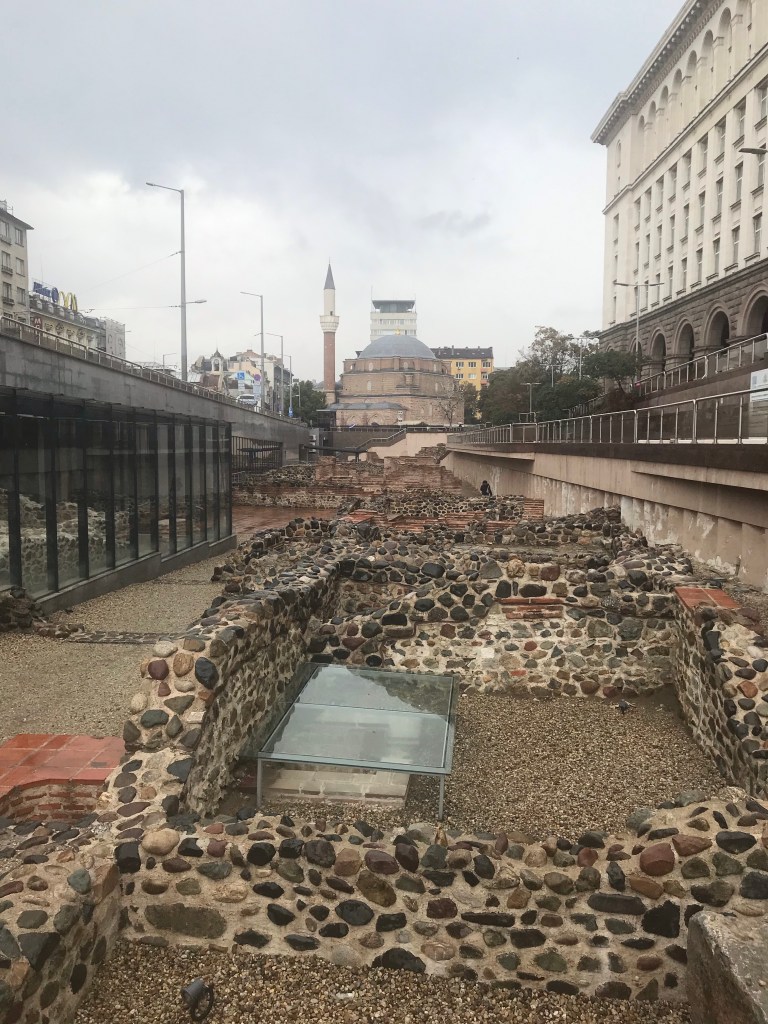
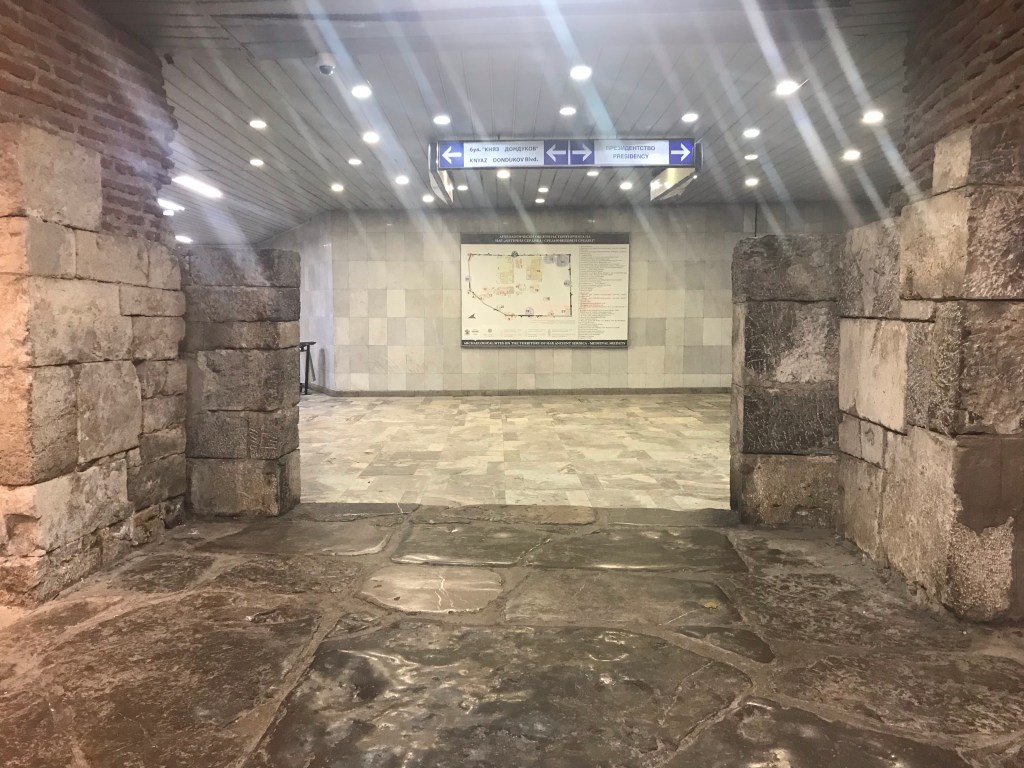
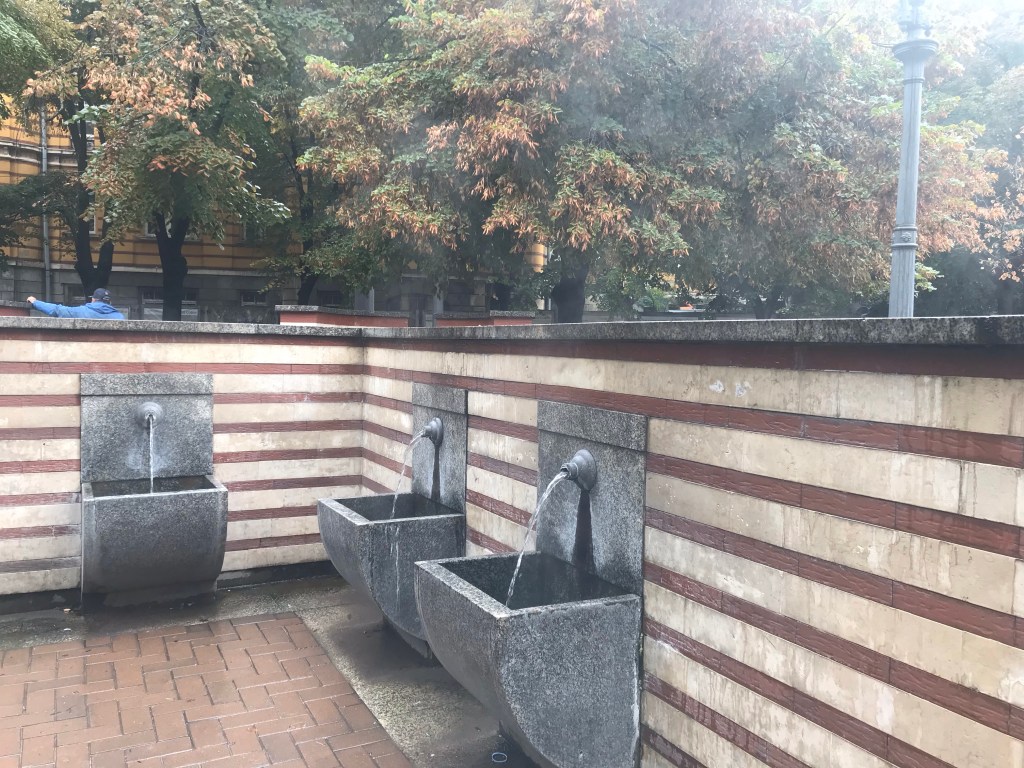
One day in Sofia I joined a walking tour of the city and the next day I experienced my first free food tour. These tours gave me a deeper understanding of the history of Bulgaria and showed me things I would have missed otherwise. Sofia isn’t on a river so the reason it became a town was mineral waters. The city still has fountains with the hot spring waters. Unlike many cities, Sofia has blended the old and new. The old Roman gate is part of a metro station. You can also walk though parts of the old Roman town on your way to the 15th century mosque.
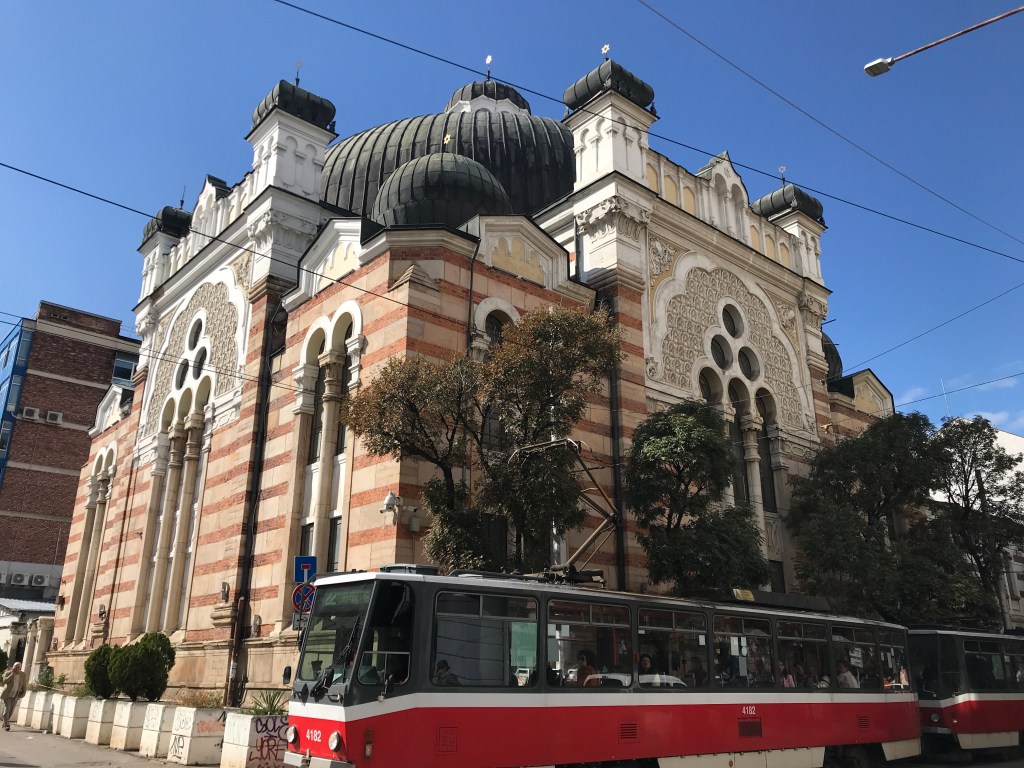
This is a synagogue. A synagogue built in 1909. During the World Wars, it was an active synagogue in a European country that was part of the Axis powers. I have seen many churches and some mosques in Europe but never any synagogues. The tour guide said that Bulgaria managed to save its Jewish population (40-60k people) from the death camps by delaying Hitler and the Nazis. This was because of large protests from the Bulgarian church and intellectuals. After a little research, I learned that some Jews in the occupied territories were sent to concentration camps but the majority in Bulgaria proper did survive. After the creation of Israel, most Bulgarian Jews have since emigrated there but a few still practice at this congregation.
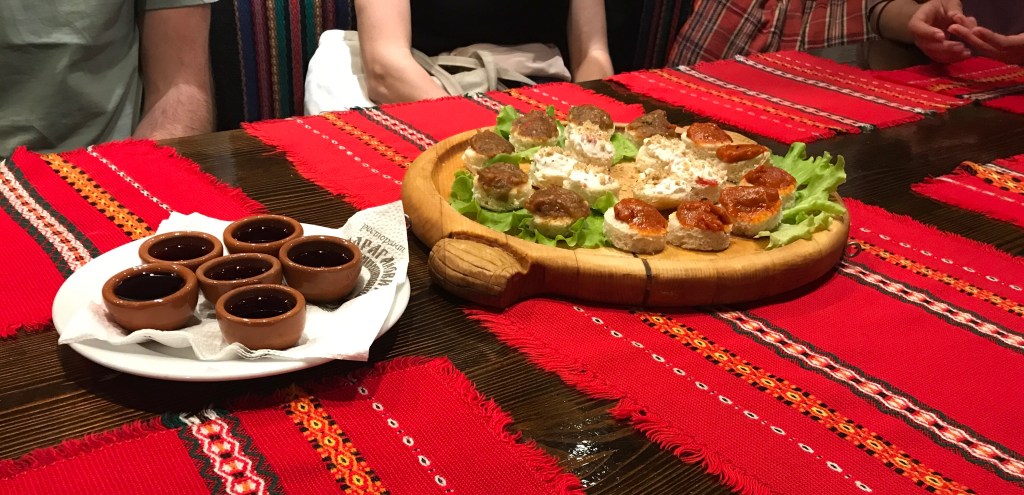
The food tour took us all around the city and we tried both modern and traditional Bulgarian food. We learned way more than just food. The guide talked about culture, history and even taught us a traditional dance.
Sofia is a nice European city. I didn’t get the chance to explore the smaller towns or countryside of Bulgaria but everyone I spoke to had good experiences. I’m glad humanity once again proved our differences are much smaller than our similarities. Thanks to everyone in Sofia who helped me from the nice cafe staff to the pharmacist who interpreted my bad signing and refilled my Dramamine to the architect student who lead the food tour to the lawyer who shared lunch with me and his concerns about life to the taxi driver who kindly took me to the airport at 0330. It’s the people you meet that shape a trip.
 Elizabeth’s Adventures